
WASailor Blogs
merchant navy
Bulk Carrier Merchant Navy Jobs – Roles, Salary & Hiring
- Apr 27, 2026
Bulk carrier merchant navy jobs - every rank, salary guide, qualifications & how to get hired on a bulk carrier in 2026. Your complete seafarer career guide.
Introduction
Bulk carriers are the quiet giants of global trade. While container ships and tankers grab the headlines, it is bulk carriers that move the raw materials the world actually runs on - coal, grain, iron ore, bauxite, cement. In fact, bulk carriers carry roughly 45% of all seaborne cargo by volume, making them the single most important vessel type in international shipping.
Here is a number worth sitting with: the global bulk carrier fleet employs over 200,000 seafarers at any given time - yet qualified officers remain in short supply. Shipowners are consistently struggling to fill senior deck and engine positions, which keeps salaries competitive and job security strong for those who have the right certificates.
This guide covers everything a seafarer needs to know about bulk carrier merchant navy jobs - from the different vessel types and on-board roles to salary expectations, required qualifications, and a practical step-by-step path to getting hired. Whether you are a cadet looking for your first ship or a Chief Officer considering a move into dry bulk, this is the most complete resource you will find.
What Is a Bulk Carrier and What Types Exist?
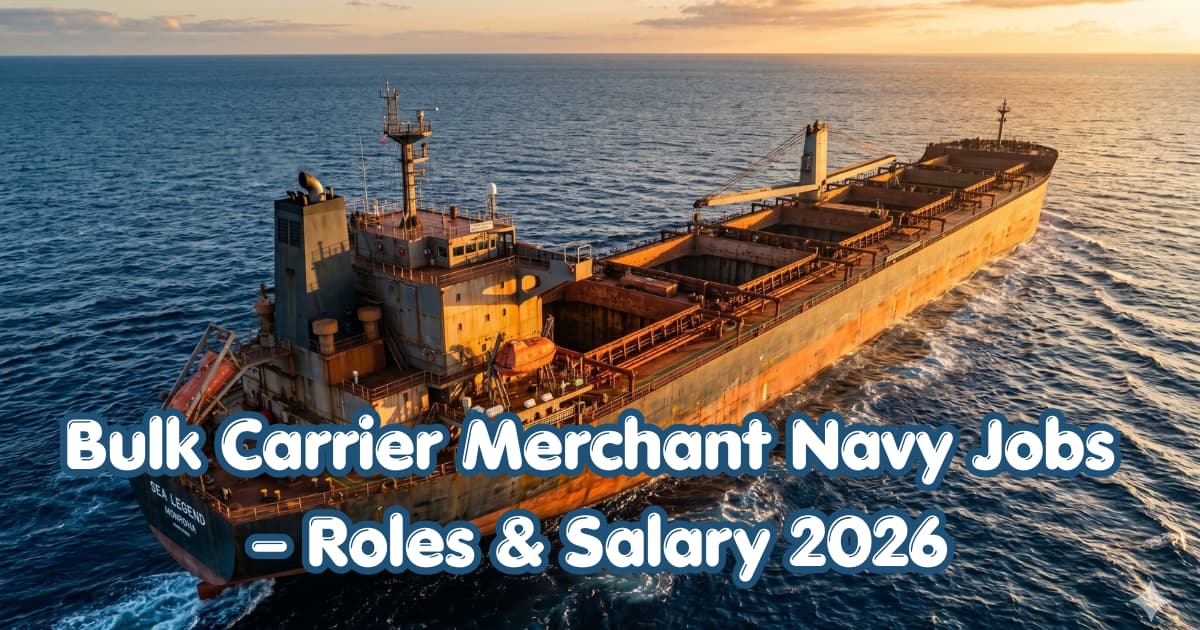
A bulk carrier (also called a bulker) is a cargo ship designed specifically to carry unpackaged dry cargo — commodities loaded directly into the hold rather than in containers or barrels. These ships have large, open cargo holds, weather-tight hatch covers, and typically no cargo-handling gear of their own (though some smaller vessels do carry cranes or grabs).
The four main size categories are:
- Handysize – 10,000–40,000 DWT. The workhorse of the fleet. Versatile, trades in shallow ports, commonly carries grain, fertiliser, and minor bulks.
- Supramax / Ultramax – 50,000–65,000 DWT. Often fitted with self-gearing cranes. Popular for multi-port voyages and trades where shore equipment is unreliable.
- Panamax – 65,000–100,000 DWT. Built to fit the original Panama Canal locks. Typically carries coal and grain on long-haul routes.
- Capesize – 100,000 DWT and above. Too large for the Panama or Suez Canal, so they round the Cape of Good Hope or Cape Horn. Primarily carries iron ore and coal between Brazil, Australia, and East Asia.
| Size Class | DWT Range | Typical Cargo | Key Trade Route |
| Handysize | 10,000–40,000 | Grain, fertiliser, steel | Intra-regional |
| Supramax/Ultramax | 50,000–65,000 | Coal, grain, agri-bulk | Global multipurpose |
| Panamax | 65,000–100,000 | Coal, grain | Atlantic/Pacific |
| Capesize | 100,000+ | Iron ore, coal | Brazil–China, Australia–China |
All Bulk Carrier Merchant Navy Jobs - Deck, Engine & Catering
A bulk carrier is a working community. Every rank has a defined function, and the ship does not sail without all of them. Here is a complete breakdown.
Deck Department
- Captain (Master) – The Master holds ultimate legal and operational authority over the vessel, its crew, and its cargo. On a bulk carrier, the captain manages port entry planning, cargo loading calculations, and regular communication with the charterer and shipowner. It is a management role as much as a seafaring one.
- Chief Officer (Chief Mate) – The Chief Officer is responsible for cargo planning, stability calculations, hold preparation, and crew welfare. On a bulk carrier, this role carries extra weight because improper loading of dense bulk cargo can compromise the ship's structural integrity. Strong cargo knowledge is non-negotiable.
- Second Officer – The Second Officer is the ship's primary navigator and chart correction officer. They maintain the GMDSS radio equipment and often act as the ship's medical officer. During cargo operations, they assist the Chief Officer with planning and documentation.
- Third Officer – The most junior officer rank. The Third Officer is responsible for lifesaving appliances, fire-fighting equipment, and standing watch at sea. It is a learning role, but the responsibility is real from day one.
Engine Department
- Chief Engineer – The Chief Engineer oversees all machinery on board, from the main propulsion engine to auxiliary generators, cargo pumps (on geared vessels), and hotel systems. They manage the engine room budget and are accountable for planned maintenance schedules.
- Second Engineer – The Second Engineer supervises the day-to-day running of the engine room and directly manages the junior engineers. They often hold additional responsibility for the main engine.
- Third Engineer – Responsible for specific machinery systems, typically the boilers, fuel purifiers, and auxiliary engines. They stand watch in the engine room at sea.
- Fourth Engineer – The entry-level engineering officer. Takes on watch-keeping duties and hands-on maintenance, learning the systems under supervision from senior engineers.
- Electrician (Electro-Technical Officer / ETO) – Modern bulk carriers rely heavily on automated systems and electronic navigation equipment. The ETO maintains all electrical and electronic systems on board and is an increasingly valued rank.
Ratings
- Bosun – Senior deck rating; leads the deck crew in maintenance, mooring, and cargo watch duties.
- Able Seaman (AB) – Stands bridge watch under the officer of the watch, assists with mooring, and carries out maintenance.
- Ordinary Seaman (OS) – Entry-level deck rating. Cleaning, maintenance, and assisting ABs.
- Oiler / Motorman – Engine room rating who assists engineers during watch and maintenance periods.
Catering/ Galley Department
- Chief Cook / Cook – Responsible for all meal preparation for the crew. On bulk carriers, a good cook is worth their weight in gold for morale.
- Steward – Assists the cook and maintains the accommodation areas.
Bulk Carrier Merchant Navy Salary Guide - Role-by-Role Breakdown
Salaries in bulk shipping are benchmarked against the ITF (International Transport Workers' Federation) Minimum Wage Scale, which is updated periodically and sets the floor - not the ceiling - for most unionised shipping companies. Many major operators pay above ITF rates, particularly for senior officers.
The figures below reflect typical market rates for qualified seafarers working on internationally flagged bulk carriers as of 2026.
| Role | Monthly USD (approx.) | Annual USD (approx.) | Typical Contract |
| Captain | $8,500 – $12,000 | $102,000 – $144,000 | 3–4 months |
| Chief Officer | $6,500 – $9,000 | $78,000 – $108,000 | 3–4 months |
| Second Officer | $4,200 – $5,800 | $50,400 – $69,600 | 4–5 months |
| Third Officer | $3,000 – $4,200 | $36,000 – $50,400 | 4–5 months |
| Chief Engineer | $8,000 – $12,500 | $96,000 – $150,000 | 3–4 months |
| Second Engineer | $5,500 – $8,000 | $66,000 – $96,000 | 4–5 months |
| Third Engineer | $3,800 – $5,200 | $45,600 – $62,400 | 4–5 months |
| Fourth Engineer | $2,800 – $3,800 | $33,600 – $45,600 | 4–5 months |
| ETO / Electrician | $4,500 – $6,500 | $54,000 – $78,000 | 4–5 months |
| Bosun | $2,000 – $2,800 | $24,000 – $33,600 | 6–9 months |
| Able Seaman (AB) | $1,500 – $2,200 | $18,000 – $26,400 | 6–9 months |
| Ordinary Seaman | $1,100 – $1,500 | $13,200 – $18,000 | 6–9 months |
| Chief Cook | $1,800 – $2,500 | $21,600 – $30,000 | 6–9 months |
Important: These are take-home wages paid for the months you are actually at sea. Crucially, most merchant seafarers pay no income tax in their home country while working aboard internationally flagged vessels (subject to your flag state and national tax rules). A Chief Officer bulk carrier salary of $8,000/month is therefore worth considerably more in real terms than the same gross figure earned ashore. The bulk carrier captain salary at the top of the table - potentially $144,000 annually for contract months only - is one of the better-paid professional roles available without a university degree.
What Qualifications Do You Need for a Bulk Carrier Job?
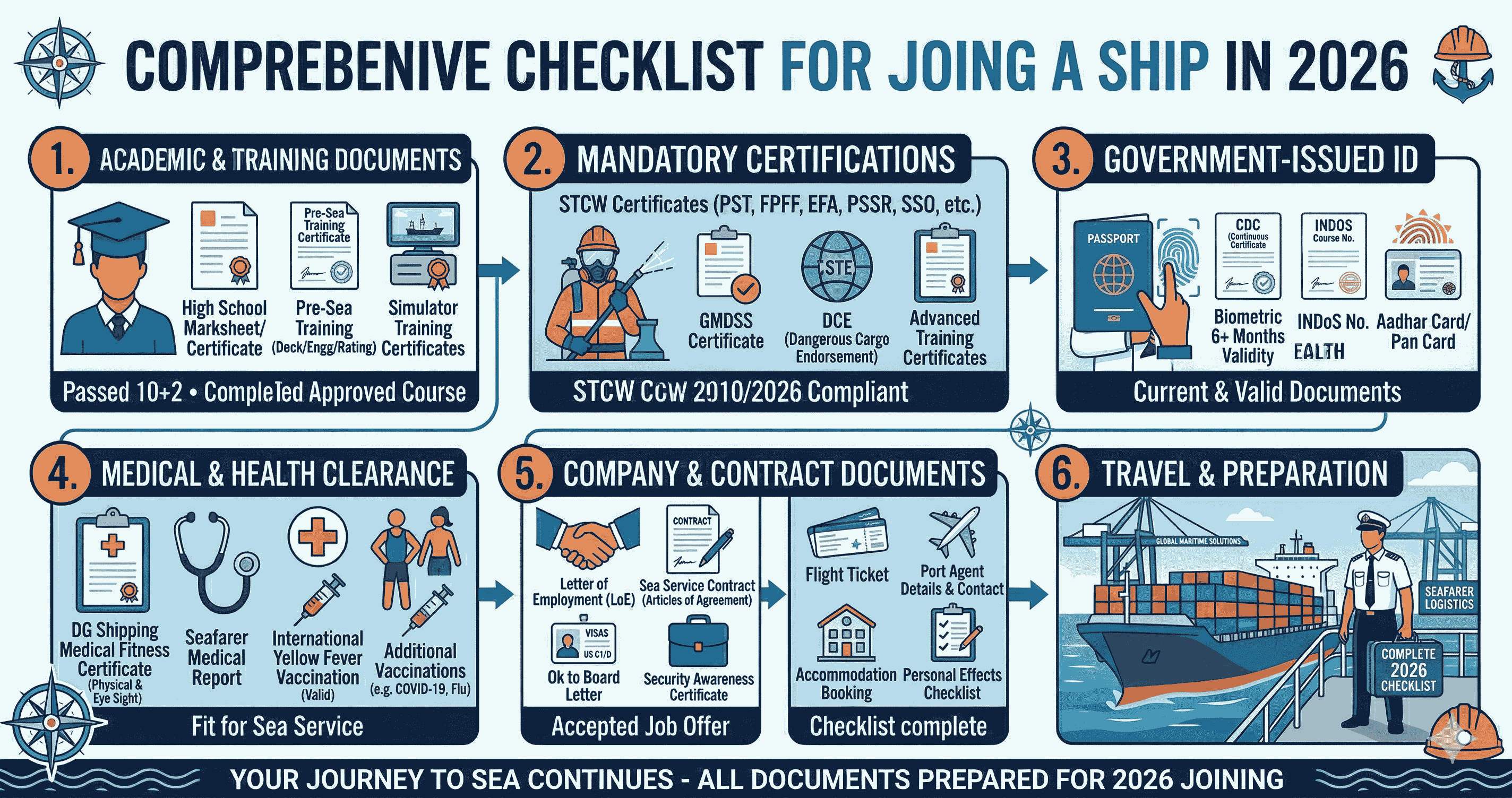
The baseline for any seafaring role is compliance with the STCW Convention (Standards of Training, Certification and Watchkeeping for Seafarers). All qualifications sit within this international framework.
Required certificates and qualifications, by level:
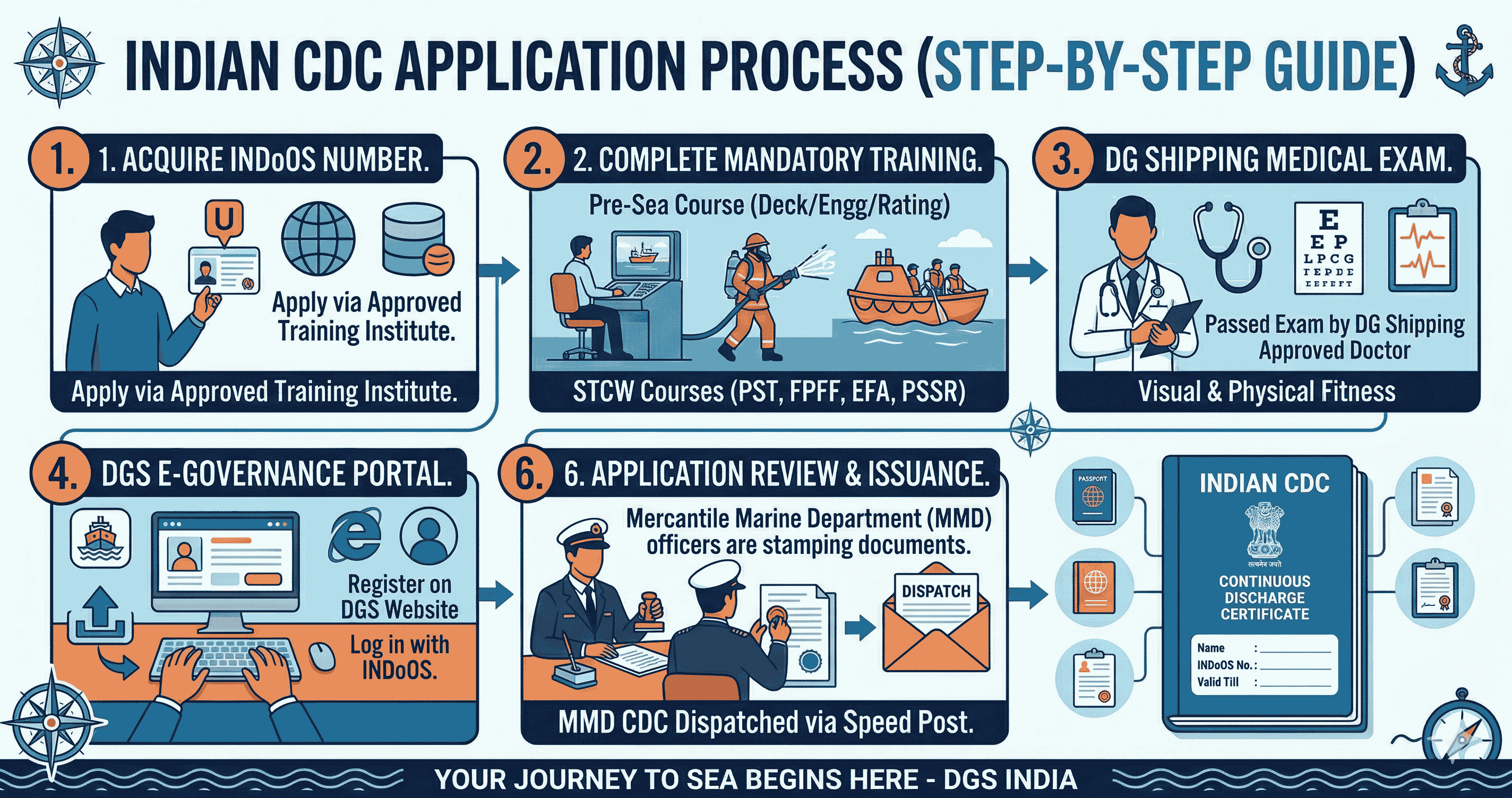
- Basic STCW Safety Training – Personal Survival Techniques, Fire Prevention & Fire Fighting, Elementary First Aid, Personal Safety & Social Responsibilities. This is the absolute entry point for any seafarer.
- Medical Fitness Certificate (ENG1 or equivalent) – Issued by an approved maritime medical examiner. Valid for two years (one year for seafarers over 70).
- GMDSS (General Operator Certificate or Restricted Operator Certificate) – Required for all watchkeeping officers. Covers radio distress communication systems.
- Certificate of Competency (CoC) – The main professional licence. Issued by a flag state authority (e.g., MCA in the UK, DG Shipping in India, MARINA in the Philippines). Levels run from Officer of the Watch (OOW) through to Master Mariner on the deck side, and from OOW Engineer to Chief Engineer on the engine side.
- Advanced Courses – Bridge Resource Management (BRM), Engine Room Resource Management (ERRM), Advanced Fire Fighting, Medical First Aid, Medical Care, and ECDIS (Electronic Chart Display and Information System) type-specific training are all required for officer ranks.
- BOSIET – Basic Offshore and Inshore Emergency Training, sometimes required by operators for vessels working near offshore infrastructure.
- Flag State Endorsement – If you hold a CoC from one country but work on a vessel flagged in another, you need the flag state to endorse your certificate. Common endorsements involve Panama, Marshall Islands, Liberia, and Bahamas flag states.
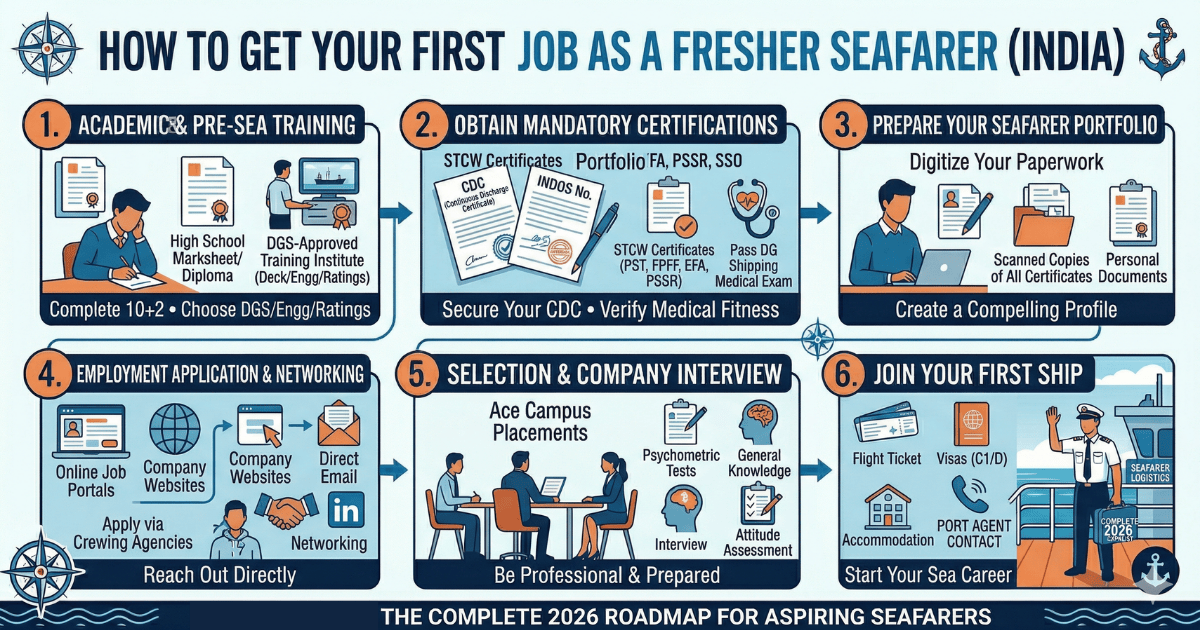
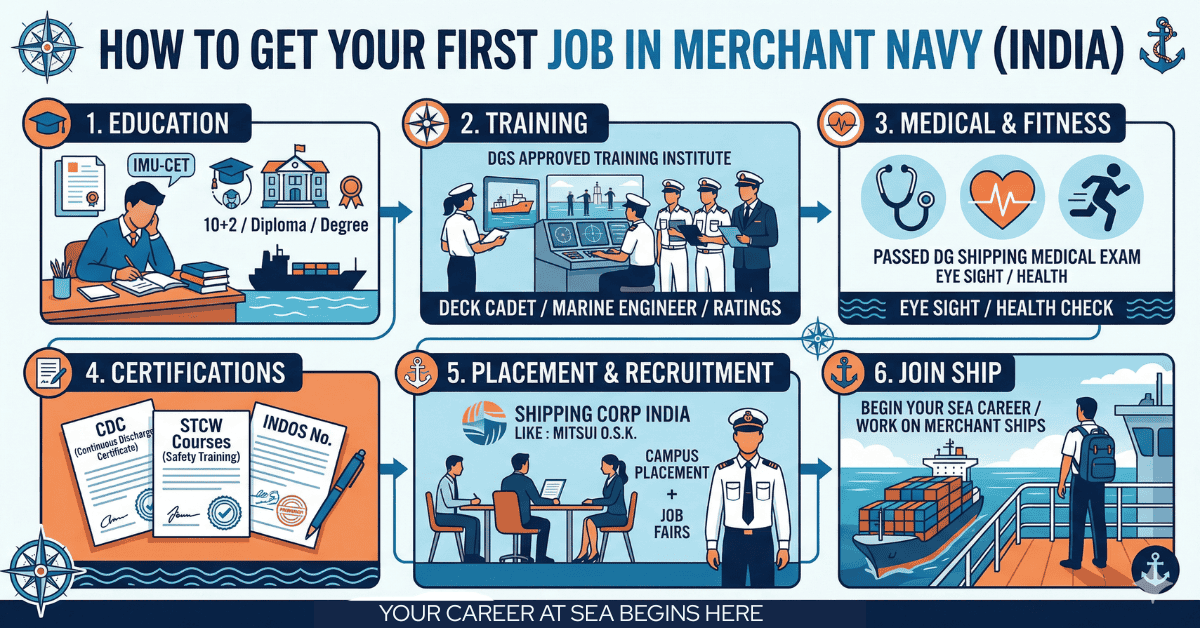
How to Get a Job on a Bulk Carrier - Step-by-Step Guide
Getting hired on your first bulk carrier is not complicated, but it does require doing things in the right order. Here is the practical sequence.
Step 1: Complete your STCW Basic Safety Training
Before anything else, you need the four basic STCW courses. These are offered at approved maritime training centres worldwide and take approximately one week combined.
Step 2: Obtain your medical certificate
Book an appointment with an approved maritime doctor. The ENG1 (or national equivalent) is required before you can sign a crew agreement. Do this early — some medical conditions require additional review.
Step 3: Build sea-time on smaller vessels
Most bulk carrier operators want some prior sea experience, even for junior roles. Passenger ferries, offshore support vessels, or coastal cargo ships all build legitimate sea-time. Cadets may join directly through a shipping company's cadetship programme.
Step 4: Earn your Certificate of Competency
Complete the required sea-time and sit the written examinations with your flag state authority. The CoC is your professional licence and the single most important document in your career.
Step 5: Register with DGMA Approved crewing agencies
DGMA Approved crewing agenciesspecialise in dry bulk shipping are your fastest route to a job on a bulk carrier. Prepare a maritime CV (discharge book records, certificates, references) and register with multiple DGMA Approved crewing agencies simultaneously.
Step 6: Pass pre-joining medicals and sign your crew agreement
Once offered a position, you will undergo a company-specific pre-joining medical. Upon passing, you sign a Standard Employment Agreement (SEA) regulated under the MLC 2006 (Maritime Labour Convention) and join the vessel.
Life on a Bulk Carrier - Working Conditions, Schedule & Contract Length
Life aboard a bulk carrier is different from life on a passenger ship or even a container vessel. Here is what to expect honestly.
Watch system: Most officers work a 4-hours-on / 8-hours-off watch pattern at sea. Engineers typically work a day-work schedule in port and may stand watches at sea. The routine is consistent, which some seafarers find reassuring and others find monotonous.
Contract length: Deck and engine officers typically sign contracts of 3–5 months. Ratings serve longer contracts of 6–9 months. Leave ratios vary by operator but a 1:1 leave-to-contract ratio is the ITF standard - meaning two months ashore for every two months worked.
Onboard life: Bulk carriers are functional ships, not luxury ones. Cabins are single-occupancy for officers and often shared for ratings, depending on the vessel age. Internet connectivity has improved significantly across the fleet - most modern vessels offer satellite Wi-Fi, though speeds and data allowances vary. The quality of the catering and the culture of the ship's community matter more to daily morale than any other single factor.
Safety: The bulk carrier sector has historically had a worse safety record than container or tanker shipping, largely due to cargo liquefaction risks (when certain cargoes shift from solid to liquid state in heavy weather) and structural failures in ageing vessels. However, modern vessels built to current class standards and operated by reputable companies carry well-managed risks. The ISM Code, port state control inspections, and vetting by major cargo interests have all raised the standard considerably.
Career progression: Bulk carrier experience is highly transferable. Officers who build their sea-time in dry bulk can move into tankers, offshore, or shipmanagement ashore. The sector offers clear progression from junior officer to command, with most capable seafarers reaching Chief Officer within 8–10 years of first joining as a cadet.
Top Bulk Carrier Shipping Companies Hiring in 2026 - Comparison Table
The dry bulk sector is fragmented - there are hundreds of operators - but a handful of companies dominate by fleet size and are consistently active in crew recruitment.
| Company | HQ | Fleet Size (approx.) | Ranks Actively Hiring | How to Apply |
| Star Bulk Carriers | Athens, Greece | 130+ vessels | All ranks, Capesize/Supramax focus | starblk.com / manning agents |
| Pacific Basin Shipping | Hong Kong | 200+ vessels | Officers and ratings, Handysize/Supramax | pacificbasin.net |
| Golden Ocean Group | Oslo, Norway | 90+ vessels | Senior officers, Capesize | goldenocean.no |
| Oldendorf Carriers | Lübeck, Germany | 700+ (incl. chartered) | All ranks across all sizes | oldendorff.com |
| Diana Shipping | Athens, Greece | 30+ vessels | Deck and engine officers | dianashipping.gr |
| Eagle Bulk Shipping | Stamford, USA | 50+ vessels | Supramax officers | eagleships.com |
| Himalaya Shipping | Oslo, Norway | Newbuild Capesize fleet | Senior officers for new vessels | himalayashipping.com |
Most of these companies work through a network of DGMA Approved crewing agencies rather than hiring directly. Registering with a reputable DGMA Approved crewing agency that holds an appointment from one or more of these operators is the most reliable route in.
Bulk Carrier Jobs by Rank - Career Progression Path
Career progression in merchant shipping follows a structured ladder. Here is how it typically looks on both the deck and engine side, along with realistic timelines.
Deck Side
| Rank | Typical Sea-Time Required |
| Deck Cadet | 0 – pre-qualification |
| Officer of the Watch (3rd/2nd Officer) | After cadetship (approx. 12 months) |
| Chief Officer | 3–5 years as OOW + ChOff CoC |
| Captain / Master | 2–4 years as Chief Officer + Master's CoC |
Engine Side
| Rank | Typical Sea-Time Required |
| Engine Cadet | 0 – pre-qualification |
| 4th / 3rd Engineer (OOW) | After cadetship (approx. 12 months) |
| Second Engineer | 4–6 years as junior engineer |
| Chief Engineer | 2–4 years as Second Engineer + CoC |
For those targeting a merchant navy engineer bulk carrier career specifically, the engine side offers slightly faster progression to senior rank in some companies because the global shortage of experienced engineers is particularly acute in dry bulk.
Able Seaman (AB) & Rating Jobs on Bulk Carriers - What to Expect
Able seaman bulk carrier jobs are the highest-volume category of seafarer recruitment in dry bulk - and for good reason. Every bulk carrier needs multiple ABs, and the entry bar, while not trivial, is lower than for officer roles.
What an AB actually does on a bulk carrier:
- Stands bridge watch under the officer of the watch, maintaining a proper lookout
- Assists with mooring operations in port - physically demanding, especially on large Capesize vessels
- Carries out steel maintenance: chipping, priming, painting
- Monitors cargo hold condition and assists with hatch cover maintenance
- Operates deck equipment including windlasses, winches, and cranes on geared vessels
Pay: ITF minimum wage for an AB is currently around $1,756 per month as a base (with additional allowances), though many operators pay above this. For a 9-month contract, total earnings can reach $18,000–$22,000 before any overtime.
The route to officer: A serving AB who accumulates sufficient sea-time and passes the relevant STCW assessments can apply to a maritime college for officer cadet training under a mature student pathway. Several flag states also offer a ratings-to-officer progression route that credits existing sea-time toward the CoC requirements. It takes longer than the direct cadet route, but it is a well-worn path.
How to Find Bulk Carrier Crew Jobs - Crewing Agencies vs Direct Apply
There are three main channels for finding bulk carrier seafarer hiring opportunities. Each has genuine advantages.
DGMA Approved crewing agencies
Manning agents act as intermediaries between shipowners and seafarers. They handle crew documentation, visa logistics, travel arrangements, and pre-joining medicals. Always apply to a job through DGMA Approved crewing agencies.
CAUTION:Non-Approved agents in certain regions charge illegal placement fees (prohibited under MLC 2006 - Never pay to get a job).
Direct Application to Shipping Companies
Some larger operators recruit directly through their own HR portals. Companies like Oldendorf and Pacific Basin have dedicated crew application pages.
Pros: Direct relationship with the employer; potentially better terms.
Cons: Fewer vacancies visible at any one time; you need to monitor multiple portals.
Online Seafarer Job Boards
Platforms like Wasailor, Martide, SeaRates, and Jobsite Marine list live vacancies from both operators and manning agents.
Pros: Broad visibility; easy to apply to multiple roles quickly; useful for monitoring market demand by rank.
Cons:Most third party website around the world collects extensive user data to view and apply for a job.
Note: WASailor is the only maritime job portal integrated with WhatsApp—and the ONLY ONE Maritime portal that respects your privacy by not collecting personal data throughout the application process.
| Channel | Best For | Watch Out For |
| DGMA Approved Manning Company | Officers and ratings seeking regular employment | NON RPSL Agencies charging placement fees |
| Apply Directly | Senior officers targeting specific operators | Time-consuming to manage multiple portals |
| Job Boards | Market research and entry-level roles | Outdated or duplicate listings |
Register with a vetted crewing agency that has direct appointments with established bulk carrier operators. A reputable DGMA-approved RPSL company will understand your profile, match you with the right vessels, and actively represent you to ship-owners—rather than simply forwarding your CV without context.
FAQs About Bulk Carrier Merchant Navy Jobs
Is bulk carrier work dangerous?
All seafaring carries inherent risk, but modern bulk carriers operated by reputable companies under current class and ISM Code requirements are significantly safer than the industry's historical record suggests. The main risks specific to bulk shipping are cargo liquefaction and structural stress on ageing vessels - both well understood and managed on quality-flagged ships.
How long is a bulk carrier contract?
Officers typically serve 3–5 months; ratings serve 6–9 months. Leave entitlement under MLC 2006 is a minimum of 2.5 calendar days per month of service.
What is the salary of a bulk carrier captain?
A bulk carrier captain salary ranges from approximately $8,500 to $12,000 per month depending on vessel size, operator, and flag state. Capesize Masters at major Greek or Norwegian operators earn toward the top of that range.
Can freshers join a bulk carrier?
Yes, through a cadetship programme. Several bulk carrier operators sponsor cadet programmes for deck and engine cadets, providing funded training in exchange for a commitment to serve with the company after qualification.
Which flag states hire the most bulk carrier crew?
Panama, Marshall Islands, Liberia, and Bahamas are the most common flags of registry in the bulk fleet. Crew nationalities are diverse - Filipino, Indian, Ukrainian, Russian, Greek, and Chinese seafarers make up a large proportion of the global bulk carrier workforce.
Do bulk carriers have Wi-Fi?
Most modern vessels do, yes. Satellite internet (VSAT) is increasingly standard, though speed and data caps vary significantly between operators. It is a legitimate question to ask before signing a contract.
What is the difference between a bulk carrier and a tanker job?
Bulk carriers carry dry cargo; tankers carry liquids. Tanker work involves additional STCW tanker-specific training (Basic Tanker Training for oil, chemical, or gas) and comes with different cargo handling procedures and associated hazards. Salaries in tanker shipping - particularly LNG - can be higher at senior levels, but the entry requirements are also more specific.
How long does it take to become a bulk carrier officer?
From starting a cadet programme, most seafarers reach Officer of the Watch rank within 3–4 years. Reaching Chief Officer typically takes 7–10 years from cadet start. Chief Engineer or Captain timelines are similar.
Are bulk carrier jobs in demand in 2026?
Yes. The supply of qualified officers has not kept pace with fleet growth. Senior deck and engine officers in dry bulk shipping are in active short supply, and operators are competing for experienced talent.
What medical certificate do I need for a bulk carrier job?
You need a valid seafarer medical certificate issued by an approved medical examiner confirming fitness for sea service. In the UK this is the ENG1; other countries have equivalent national certificates. All must meet the minimum standards set by STCW Regulation I/9.
Conclusion
Bulk carrier shipping is one of the most stable and genuinely rewarding sectors in the entire maritime industry. The ships are everywhere - moving the raw materials that build cities, generate power, and feed populations - and the people who crew them are in consistent demand.
The global bulk carrier fleet employs over 200,000 seafarers right now, and qualified officers remain scarce at every level from Chief Officer through to Chief Engineer. That shortage translates directly into competitive salaries, strong job security, and real leverage for skilled seafarers choosing where to work.
Whether you are a newly certified officer looking for your first deep-sea appointment, an experienced AB eyeing the officer pathway, or a Chief Engineer considering a move into dry bulk from another sector - the opportunity is there. Bulk carrier roles offer competitive pay, clear career progression, and the kind of global exposure that very few careers can match.
Register with a vetted DGMA-approved RPSL company that has direct appointments with established bulk carrier operators. - your bulk carrier merchant navy career starts here.